City of Marlin  
 
"Home in the Heart of Texas"
 

Welcome to Marlin

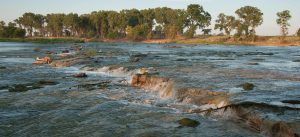
Marlin, the county seat of Falls County, is at the intersection of State highways 6 and 7, four miles east of the Brazos River near the center of the county. The site was that of Sarahville de Viesca, established in 1834 by Sterling Clack Robertson on the west side of the falls of the Brazos. The town was named to honor John Marlin, a pioneer patriot.

Zenas Bartlett's General Store was the first business, and its brick building was used for a school for a short period. Bartlett's wife later deeded the property to the city as a site for the city hall. Marlin had a freighting business, a tavern, a law office, and later the Green-Bartlett Mercantile Business. The first courthouse was a log cabin; it was used for county business and court, as a school, as a church, as a meeting place for political and community meetings, and as a dance hall. The present courthouse was constructed in 1938-39.

Marlin incorporated in 1866. The Houston and Texas Central Railway completed its line in 1871. The population of Marlin tripled from 500 to 1,500 in a decade. In 1851 the post office was established, and John W. Jarvis, the sheriff and a former teacher, was appointed postmaster. Mail was brought in by stage. The Bank of Marlin was chartered in 1892 and closed in 1963.

In 1892 hot mineral water was found during the search for an artesian well. Dr. J. W. Cook promoted Marlin as a health center. Bethesda Bathhouse, Majestic Bathhouse, Imperial Hotel, Torbett Hospital, and the pavilion for the flowing hot water fountain were all founded soon after.

For the next fifty years Marlin geared its economy to the health industry. Dr. S. P. Rice had an infirmary and drugstore. In 1925 Dr. Frank H. Shaw built a crippled children's clinic, providing treatment and therapy for handicapped children, including victims of polio and arthritis. He utilized the hot mineral water in a swimming pool and provided other muscle building therapy. This hospital was closed after World War II.

Telephones reached Marlin by 1900; automobiles, electricity, and Lone Star Gas soon followed. Marlin had the Peacock Bottling Company, stock pens, a brick yard, a turkey-processing plant, a saddlery, a water crystalization plant, and a pottery plant.

Disclaimer City of Marlin
NEITHER THE CITY OF MARLIN, TEXAS, ITS AGENTS, OFFICERS, OR EMPLOYEES (HEREAFTER THE CITY OF MARLIN) GUARANTEES OR WARRANTS THE ACCURACY, RELIABILITY, OR TIMELINESS OF THE INFORMATION CONTAINED HEREIN. THE INFORMATION CONTAINED WITHIN THESE PAGES IS PROVIDED AS A PUBLIC SERVICE WITHOUT WARRANTY OF ANY KIND, EITHER EXPRESS OR IMPLIED. THE INFORMATION CONTAINED HEREIN IS FOR GENERAL GUIDANCE ONLY AND SHOULD BE VERIFIED BY THE USER WITH THE APPROPRIATE DEPARTMENT OR AGENCY. Any information, comments, suggestions or ideas submitted by use of this page shall become the property of the City of Marlin. The City of Marlin does not guarantee the confidentiality of any communication between the City and any other person or entity by use of this site. Any links contained within this site are provided as a service. No guarantee, warranty, or endorsement is implied by their inclusion. The City of Marlin is in no way responsible for the content of any pages linked in this manner.